What is an extender, and why do we use one without egg yolk?
Author
Cryolab Eersel
November 20, 2026
If you have your dog's semen frozen, you'll often hear us talk about the extender. But what is it, exactly? Maarten explains.
Protection during freezing
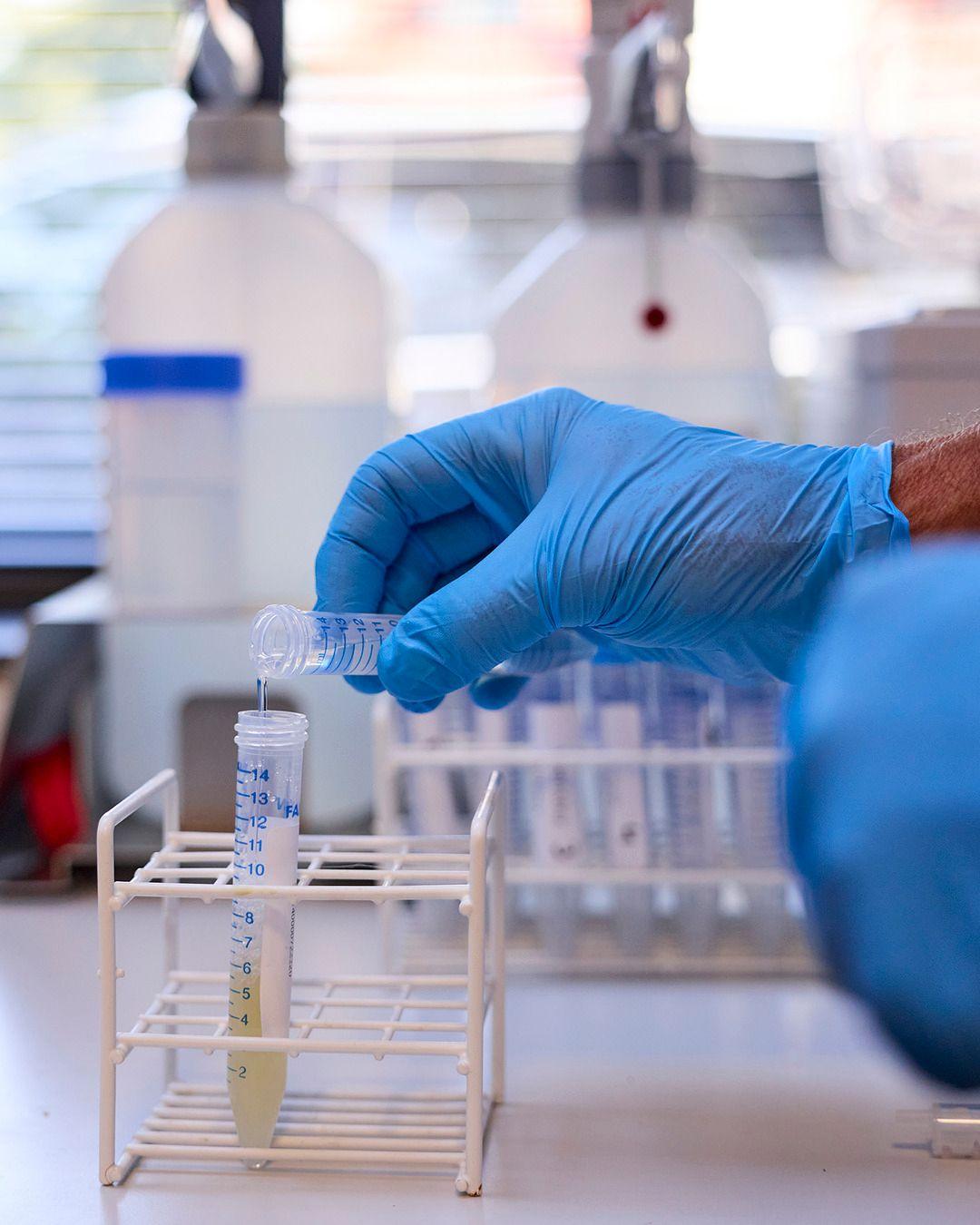
“An extender is what you add to semen to protect it from damage during freezing,” says Maarten. Right after collection, we mix the semen with the extender. Only then does it go into straws and into liquid nitrogen, at -196 °C.
Without protection, the cold damages the sperm cells. That's why an extender for frozen semen contains a kind of antifreeze. It protects the sperm cells while they are frozen and thawed.
What an extender does
A sperm cell is a living cell. It needs nutrients and produces waste. A good extender therefore does more than protect against the cold:
• it feeds the sperm cells;
• it buffers the waste they produce;
• it protects the cell membrane;
• it protects against damage from freezing.
Chilled or frozen
Chilled semen needs a different extender from frozen semen. “In principle, chilled semen is damaged a little less,” Maarten explains. “When you freeze it, you may still damage the sperm cells slightly.” That's why an extender for frozen semen has to offer extra protection.
Why no egg yolk?
Many extenders contain egg yolk. We use a synthetic extender, without egg yolk. “If you use egg yolk, you can run into diseases carried in that egg yolk,” says Maarten. “So without egg yolk is safer, especially for semen that goes abroad.”
That matters, because our frozen semen travels to countries all over the world, from Scandinavia and Southern Europe to the United States and Australia.
Research into the best extender
We research which extender works best ourselves, including together with HAS Den Bosch and Ghent University. In an earlier comparison of extenders, the one we use now came out best. But we keep testing and improving. We are currently looking at the amount of antifreeze in the extender, and at the time between collection and freezing.
Questions?
Would you like to know how freezing works for your dog? Call us on +31 497 745 562 or email [email protected]. We're happy to help.
Recent Posts